Highland Cattle Standards
Recognize Our Highland Cattle Breed Standard
We work continually to breed Cali Mini Highland Cows that fit quality Standard, while improving the temperament and MATERNAL traits of our animals. We believe the MATERNAL traits passed down by the bulls are the most overlooked in breeding.
Mini Highland Cow Breed
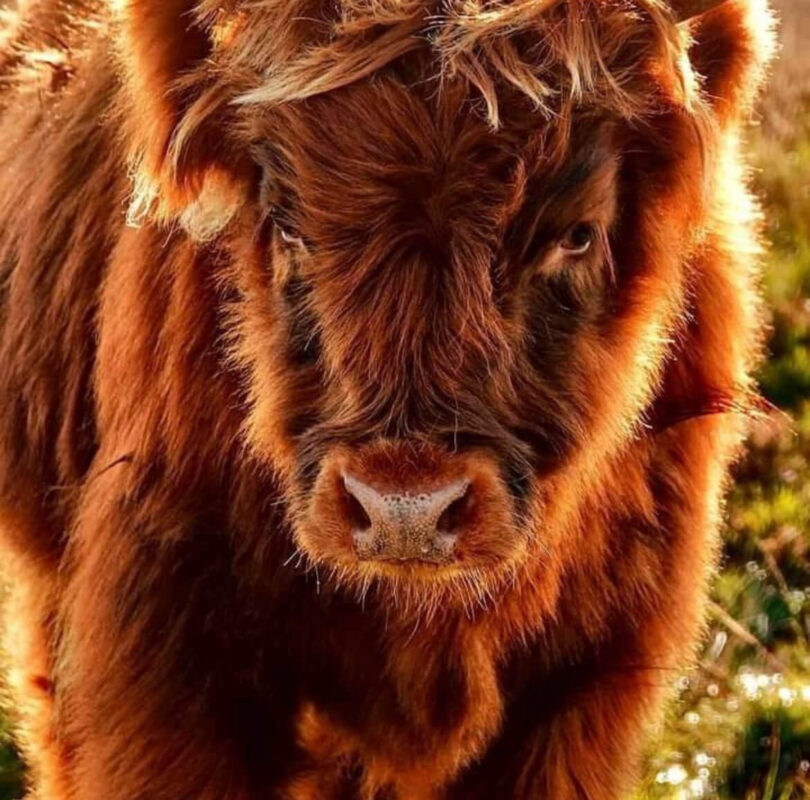
Among all British bovine breeds, the Mini Highland Cow is distinguished by its grand and picturesque head, which is beautifully proportionate to the body. The head is broad between the eyes and short from the eyes to the tip of the muzzle, creating a striking and balanced appearance.
The forelock—the hair between the eyes—should be wide, long, and bushy. Any thinning or bare spots can detract from the cow’s overall look. The eyes are bright and expressive, reflecting both alertness and courage when the animal is excited.
Viewed from the side, the jaw should appear proportionate to the width of the head, maintaining symmetry and balance. The muzzle is short but broad, with fully flared nostrils that highlight the animal’s superior breeding and refinement.
The Horns
The Mini Highland Cow’s horns are a defining feature, gracefully curving upward and outward in a symmetrical, well-proportioned sweep. Moderate in length and strong in structure, they complement the cow’s broad head, expressive eyes, and bushy forelock, adding to the breed’s iconic and majestic appearance.
The neck & shoulders
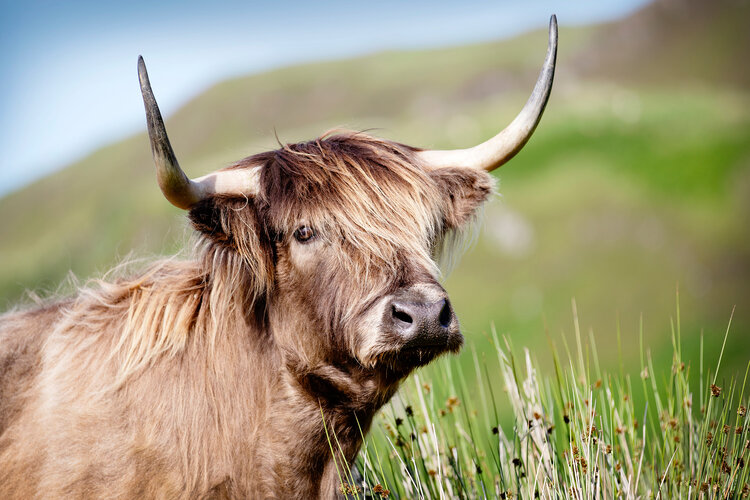
The neck of a Mini Highland Cow should be clean and free of a dewlap. In cows, it forms a straight, elegant line from the head to the shoulder. In bulls, it features the distinct bovine crest, gracefully extending to the base of the horns and covered with wavy hair, enhancing the animal’s masculine appearance.
The shoulders are thick and well-filled, tapering smoothly from the shoulder point to the lower forearm, providing strength and balance to the animal’s overall structure.
Back, Quarters, and Legs
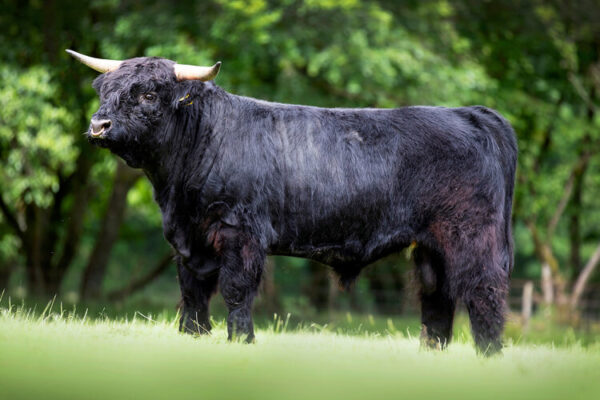
From the shoulders backward, the Mini Highland Cow should have a fully developed, beautifully rounded back, free from hollowing or sinking, with well-sprung, deep ribs. The hips should be broad, with well-developed quarters and full, muscular thighs.
The hindquarters should appear square from hips to tail and down to the feet. Both the forelegs and hind legs should be short, powerful, and straight, with strong, broad bones, well-set, large hooves, and feathered hair.
The animal should stand wide between the forelegs and move with dignity and style—an unmistakable sign of careful breeding and superior conformation.
Back, Quarters, and Legs
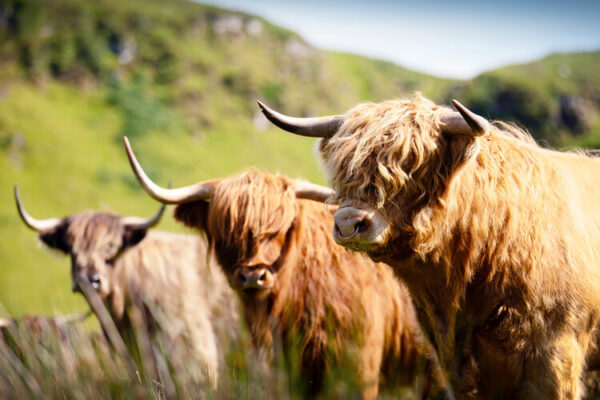
There should be a profusion of hair which should be long and gracefully waved. Curly hair is regarded as a fault and has become common in some folds. This may be due to a growing desire to make Highlanders grow big from feeding them higher and housing them more.
Experience however has shown that the more exposed they are, the animals generally have more hair with less tendency to curl. Indeed, island cattle have much more hair than mainland cattle, due to them never being housed in winter.
Although the classic image of a Highland cow today is red they also come in other shades including yellow, brindle, dun, white and also black, the breed’s original colour. In general, a good herd should have a mixture of colours. The thickness of the skin, as in all fattening breeds, must always be considered. Thankfully, Highland cattle have been adapted by nature to withstand exposure to harsh conditions.